NCAA athletes often feel behind when thinking about careers, but the reality is the opposite. The structure, discipline, and accountability developed through sports translate directly into business environments.
The key is not learning entirely new skills, it’s learning how to position what you already have, take action early, and get exposure to real-world roles. Start by exploring general business paths, build experience where you can, and prioritize networking over blindly applying online. Structured guidance can accelerate this process significantly.
For many NCAA athletes looking for career advice, the biggest challenge isn’t ability, it’s a lack of exposure and direction.
College athletics creates a highly structured environment. Your schedule is set, your goals are clear, and feedback is constant. When that structure disappears, you’re expected to navigate an entirely new landscape without a roadmap. At the same time, most athletes have spent the majority of their time focused on sport, which limits opportunities to explore different industries or gain professional experience.
This combination often leads to uncertainty, not because athletes aren’t capable, but because they haven’t been given the same level of guidance in their careers as they had in their sport.
The best career advice for NCAA athletes starts with reframing the situation: you are not starting from scratch.
What you’ve built through sports is a foundation that many entry-level candidates simply don’t have. You’ve operated in competitive environments, handled pressure, responded to coaching, and consistently worked toward long-term goals.
These qualities show up in business as:
While technical skills can be taught on the job, these traits are much harder to develop, and they’re often what hiring managers value most early in a career.
If you’re an NCAA athlete looking for career advice, it’s helpful to start with roles where your natural strengths give you an immediate advantage.
Many athletes find early success in general business roles because they offer clear performance metrics, fast feedback loops, and opportunities to grow quickly.
Business development and sales are often strong entry points because they reward effort, resilience, and consistency. You’re measured on output, not just experience, which creates a more level playing field.
Operations and strategy roles are another strong fit, particularly for athletes who thrive in structured environments and enjoy execution. These roles focus on keeping systems running efficiently and require attention to detail and accountability.
Customer success and account management lean heavily on communication and relationship-building, while marketing can be a strong option for athletes interested in storytelling, branding, or creative work.
The goal at this stage isn’t to find the perfect long-term career, it’s to find a starting point that builds momentum.
The most effective career advice for NCAA athletes is simple: don’t wait for clarity, create it through action.
Start by reflecting on your experience as an athlete. Think about the role you played on your team, the environments where you performed best, and the responsibilities you naturally took on. This helps you identify patterns that translate into professional strengths.
From there, begin exploring different career paths. Instead of focusing only on job titles, look at what people actually do day-to-day. Understanding how roles function will give you a clearer sense of where you might fit.
Experience is the next step. This doesn’t have to be perfect or even directly aligned with your long-term goals. Internships, part-time roles, or even short-term projects all help you build context and confidence.
Finally, spend time learning basic business fundamentals. Communication, time management, and professionalism go a long way early in your career and can immediately set you apart.
This is exactly where structured support can make a difference. At Shift Group, we guide athletes through this process by helping them identify their strengths, understand different career paths, and build real-world skills that translate directly into business roles. Instead of guessing where to start, you’re given a clear framework and actionable steps to move forward with confidence.
Two athletes can have nearly identical backgrounds and end up with very different opportunities. The difference often comes down to networking and how well they tell their story.
Networking is not about asking for jobs, it’s about building relationships and learning from others. Conversations with alumni, former teammates, and mentors can open doors that applications alone cannot.
At the same time, you need to clearly communicate your experience in a way that resonates in a business setting. Employers don’t automatically understand what it means to be a captain or compete at a high level, you have to translate it.
For example, instead of simply stating a title, explain the impact behind it. What did you lead? What were you responsible for? How did you contribute to results?
That translation is often what turns interest into opportunity.
This is another area where many NCAA athletes struggle without guidance. At Shift Group, our major focus is helping athletes refine their story and practice communicating it in a way that aligns with what employers are actually looking for. We also emphasize intentional networking, teaching athletes how to have the right conversations, build relationships, and create opportunities instead of relying solely on online applications.
Most mistakes come from a lack of direction rather than a lack of effort.
Some of the most common include:
Avoiding these pitfalls can dramatically improve outcomes, even without dramatically increasing effort.
The transition out of sports doesn’t have to be something you figure out alone.
Programs, mentorship, and structured guidance can provide a level of clarity and accountability that’s difficult to create on your own. Instead of guessing which roles to pursue or how to position yourself, you’re given a framework that’s already proven to work.
The biggest advantages of these types of resources are speed and direction. You spend less time figuring things out and more time actually building toward a career.
Start early, focus on transferable skills, build experience through action, and prioritize networking over submitting online applications.
General business roles such as business development, operations, customer success, and marketing are often strong starting points because they align well with the traits athletes already have.
Internships are not required, but they can significantly improve confidence, provide exposure to real-world environments, and make the transition smoother.
By clearly translating their experience into business impact, communicating effectively, and demonstrating coachability, consistency, and work ethic.
Ideally, athletes should start during their college career by exploring roles, building relationships, and gaining experience. However, even starting after sports end, taking immediate action can still lead to strong outcomes.
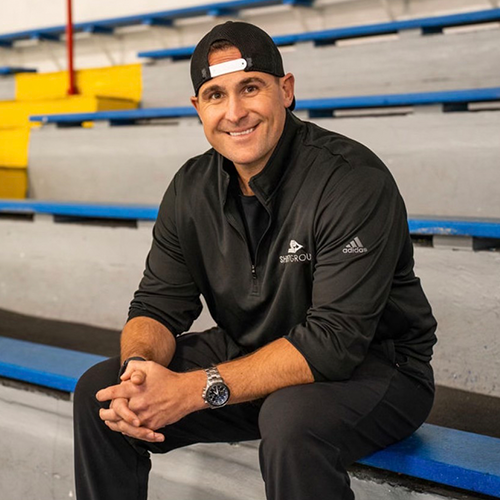
Prior to founding Shift Group, JR held senior revenue leadership roles at high-growth technology companies, including serving as Chief Revenue Officer at Pillir, where he built the company’s go-to-market strategy and top-tier AWS partnerships. Before that, he was an early employee at Turbonomic, helping scale the company through its $2B acquisition by IBM while leading top-performing sales teams and enterprise growth. JR is a graduate of the College of the Holy Cross, where he played Division I hockey.
Shift Group is the premier talent platform for building high-performing teams. We turn the experience of athletes and veterans into business-ready skills, delivering a steady pipeline of qualified, pre-vetted candidates with the mindset, discipline, and work ethic to make an immediate impact.
For companies: Our platform accelerates sourcing and hiring, reduces risk, and improves retention and time-to-productivity. The result is a more efficient, data-driven hiring process and a competitive edge built on proven talent.
For athletes and veterans: We’re your partner in career transition. From functional skill training to interview prep and job placement, we guide you step-by-step. Our platform teaches you how to leverage your unique background and story through video to stand out to employers. And our curated job board gives you direct access to top opportunities, helping you launch a career that matters.
Shift Group connects elite talent with companies that value drive, resilience, and leadership, creating high-performing teams and meaningful careers.
Shift Group’s platform transforms the skills of athletes and veterans into business-ready talent for companies seeking high-performing teams.
Copyright © 2025 Shift Group