Most NCAA athletes don’t struggle to get their first job because they lack ability, they struggle because the system they’re entering is different from the one they were trained in. In athletics, success is built through structure, coaching, repetition, and constant feedback loops.
That same system actually produces some of the most employable candidates in the workforce. The challenge is not developing new skills, it’s translating existing strengths into career direction, positioning, and communication. Athletes who apply a structured job search system consistently land roles faster than those who rely on broad applications or job boards.
For most NCAA athletes, the challenge after graduation is not a lack of ability, it’s a shift in environment.
In athletics, success is built through structure, coaching, repetition, and feedback loops. That same system is exactly why NCAA athletes often become strong hires in the workforce. Those environments build discipline, coachability, resilience, and the ability to improve quickly under pressure.
The difference after sports is that the structure disappears.
In athletics, you had:
In the job market, none of that is automatically provided.
So the challenge isn’t capability, it’s lack of a defined system.
Before solving the job search, it’s important to be clear on something:
NCAA athletes are already highly attractive candidates.
Companies consistently value:
These traits are difficult to teach in early-career hires, which is why athletes often stand out once properly positioned.
The issue is not whether athletes are qualified, it’s whether their experience is translated into language that hiring managers understand.
One of the biggest mistakes athletes make after college is trying to “figure everything out” before starting.
That usually leads to delay, confusion, or overthinking.
Instead, the goal is directional clarity.
Ask: “What environments match how I already operate at a high level?”
Most former NCAA athletes tend to succeed in environments that are:
That’s why many athletes naturally align with roles like:
Direction is not about certainty, it’s about narrowing focus so effort compounds.
This is where most athletes unintentionally limit themselves, not because their experience isn’t strong, but because it isn’t clearly translated for a business audience.
Athletes often describe their background using real, accurate titles and experiences:
Those should absolutely stay. In fact, they are powerful signals of leadership, discipline, and performance under pressure.
The key is not to avoid those terms—it’s to use them as the foundation, then translate what they mean in a performance and business context so hiring managers can understand the level of responsibility behind them.
Why Translation Matters
Two candidates can have identical athletic backgrounds, but the one who gets interviews is the one who can clearly connect their experience to how work environments actually operate.
It’s not about sounding different, it’s about making your experience legible in a business setting.
Example 1
Say it clearly:
“I was a team captain for two seasons.”
Then translate it:
“In that role, I operated in a high-performance environment requiring consistent execution, accountability, and leadership across structured weekly preparation and performance cycles.”
Example 2
Say it clearly:
“I started for four years at a Division 1 program.”
Then translate it:
“That experience required maintaining consistent performance in a high-pressure environment with ongoing evaluation, structured preparation cycles, and team-based execution standards over multiple seasons.”
The takeaway
You are not “rewording” your experience, you are bridging context gaps.
Athletes already have the experience companies want. Translation ensures hiring managers understand the depth, intensity, and structure behind it.
Most athletes approach job searching like a volume game:
But the job market doesn’t reward volume, it rewards precision and alignment.
A strong system looks like:
The goal is not more activity, it’s a better signal.
Athletes already understand this principle from training: structured reps with constant feedback leads to improvement
Many athletes misunderstand networking because they treat it like a social skill instead of a performance system.
But effective networking is closer to:
The goal is not to immediately ask for opportunities.
The goal is to:
Strong networking is structured curiosity, not transactional outreach.
Most athletes don’t struggle in interviews because they lack answers, they struggle because their answers lack structure and clarity.
A strong interview response should consistently include:
But beyond structure, the real separator is iteration.
Athletes who get hired quickly:
Athletes who struggle:
The job search works the same way as sport: repetition + feedback + adjustment = performance improvement
The fastest path is building direction, translating athletic experience into business language, and executing a structured, targeted job search rather than mass applying.
Because athletes move from a highly structured performance environment into an unstructured job search system without a defined playbook.
Yes. Traits like discipline, coachability, resilience, and accountability are highly valued, but only when clearly communicated in business terms.
Common entry points include business development, operations, recruiting, finance, and early-stage startup roles.
As a structured performance system—not a random application process.
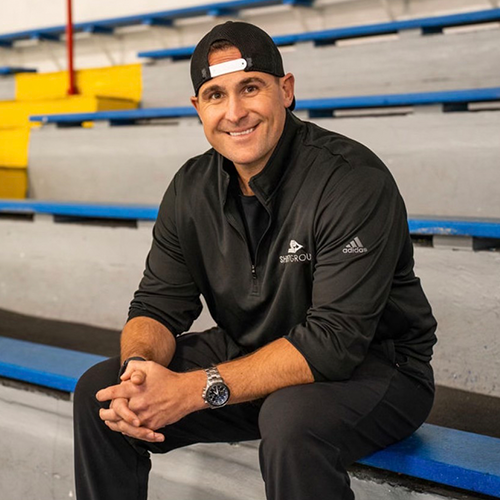
Prior to founding Shift Group, JR held senior revenue leadership roles at high-growth technology companies, including serving as Chief Revenue Officer at Pillir, where he built the company’s go-to-market strategy and top-tier AWS partnerships. Before that, he was an early employee at Turbonomic, helping scale the company through its $2B acquisition by IBM while leading top-performing sales teams and enterprise growth. JR is a graduate of the College of the Holy Cross, where he played Division I hockey.
Shift Group is the premier talent platform for building high-performing teams. We turn the experience of athletes and veterans into business-ready skills, delivering a steady pipeline of qualified, pre-vetted candidates with the mindset, discipline, and work ethic to make an immediate impact.
For companies: Our platform accelerates sourcing and hiring, reduces risk, and improves retention and time-to-productivity. The result is a more efficient, data-driven hiring process and a competitive edge built on proven talent.
For athletes and veterans: We’re your partner in career transition. From functional skill training to interview prep and job placement, we guide you step-by-step. Our platform teaches you how to leverage your unique background and story through video to stand out to employers. And our curated job board gives you direct access to top opportunities, helping you launch a career that matters.
Shift Group connects elite talent with companies that value drive, resilience, and leadership, creating high-performing teams and meaningful careers.
Shift Group’s platform transforms the skills of athletes and veterans into business-ready talent for companies seeking high-performing teams.
Copyright © 2025 Shift Group